Two fighters.
Two corners.
One pixel at a time.
One shared world, live in your browser. Fight real opponents in ranked PvP, climb the seasonal Fight Tower, and walk a hub full of other people writing their own stories. Every punch, block and knockdown is animated live, pixel by pixel, wrapped in a full broadcast production.
Free · No account needed · No download · Playing in seconds
Four things under the hood.
No two fights are the same: the fighters, the combat and the world all generate on the fly. And the world is shared.
Procedural fighters
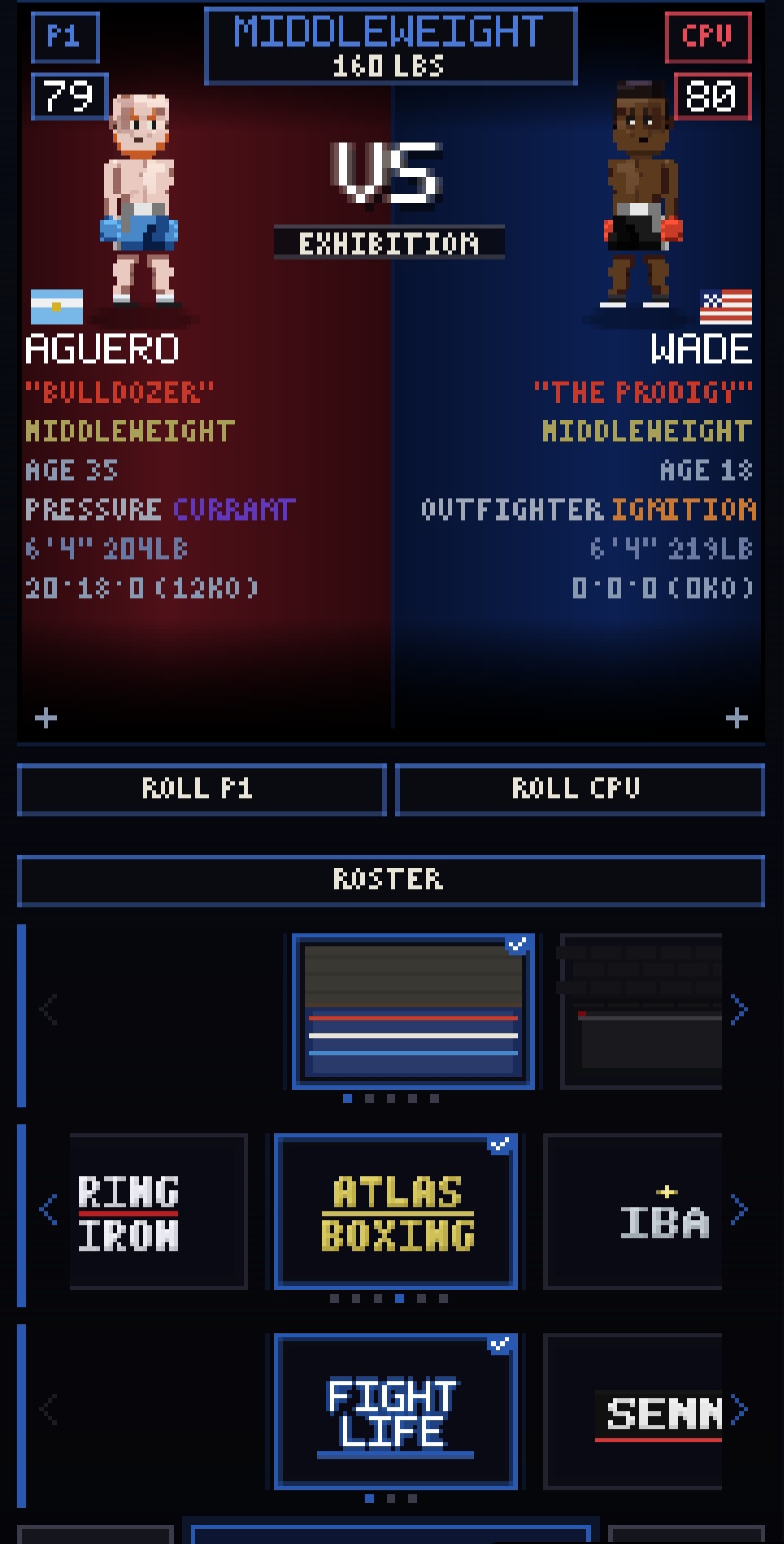
Every boxer is generated: record, build, stance, nickname, face. Infinite roster, none of it hand-authored.
Technique combat
Three signature gloves, each a real mechanic. Charge it through the round, spend it in a timed window.
A broadcast world
Six promotions, eighteen belts, three TV networks with named commentary teams calling every round.
One shared world
The core is online: ranked PvP against real opponents, the seasonal Fight Tower, a live ladder, a season pass, and a hub you share with everyone else playing.
Three systems, one fight night.
Combat is a real engine, not a sprite swap.
Two fighters share a single line, and every punch, block, dodge and knockdown is rendered live, pixel by pixel, with no pre-baked animation. The opponent AI reads the round: it presses when you're hurt, paces when it's ahead, and goes for broke when it's behind on the cards.
On top of that sits the technique system. Each fighter carries one of three signature gloves. You charge it through the round, then spend it in a short timed window: a burst of stacked damage, a stamina drain, a heal off blocked shots. It's the difference between two fighters and two styles.
A boxing world that broadcasts back.
Fights don't happen in a vacuum. Six promotions run their own cards across three weight classes, eighteen championship belts in all, and three rival TV networks carry the action, each with its own look, its own music and its own named commentary team.
The commentary is a storytelling state machine: 2,055 authored lines, a 150-pattern library that reads the fight's signals and builds a narrative across the rounds. Predictions made before the bell get called back to, or subverted, by the final bell.
Build a fighter, put him on the card.
Roll a procedural boxer or shape your own: build, stance, glove, look. Then make the match: pick the promotion, the network and the venue, or take a title bout and put a real belt on the line.
Then take him into the shared world: ranked PvP against real opponents, a live ladder, a season pass, and the seasonal Fight Tower: a PvE ladder you climb one opponent at a time, picking up cards that change how your fighter fights.
In development: the shared-world career. Career is a single-player story: your rise, your rivalries, your belts, played inside the online world, with online-integrated elements around it: a hub you walk among other players, chat, and everyone else's careers unfolding alongside your own. You write your story; so does everyone around you.
One world, everyone in it.
Fight Life is an online shared-world experience. Three ways in, one world underneath.
Ranked, live
Real opponents, a live ladder, seasonal standings. Your fighter, your glove, your record on the line.
The Fight Tower
The seasonal climb: one opponent at a time up the tower, collecting cards that change how your fighter fights. A new season, a new tower.
Shared-world career in development
A single-player story with online-integrated elements. Your career is yours alone, but it happens inside the shared world: walk the hub, chat, and watch everyone else's stories unfold around your own.
Every frame, in-engine.
Ready for the first bell?
Free, runs in any browser, installs to your phone. One shared world, no download, no waiting.
PLAY NOW → On a computer? Scan to play on your phone.